The expanse of the Southern Hemisphere represents perhaps the most profound geographical terra incognita in human history. While our collective consciousness has been saturated with images of the spherical Earth, populated with detailed maps of the Northern latitudes, the South remains a void—a silent, frozen mystery that defies the standard narrative. In the realm of Flat Earth theory, this obscurity is not an accident of discovery; it is the intentional result of a geopolitical containment strategy designed to obscure the true nature of our world. The focus shifts from the assumption of a globe to the concept of a vast, frozen barrier: the Ice Wall.
To understand the significance of the Ice Wall, one must first confront the anomaly of the Southern Hemisphere itself. The standard model posits that the South is simply a continuation of the Northern continents, mirrored across the equator, creating a symmetrical sphere. However, the empirical evidence suggests otherwise. We possess extensive cartography of the Northern lands, yet the Southern continent is a phantom. There are no detailed maps of the Antarctic interior. We have no satellite imagery of the vastness beyond the coastal research stations. The Southern Hemisphere is not merely unexplored; it is effectively sealed off. This restriction is not due to a lack of technology, but rather a deliberate embargo on exploration. The Antarctic Treaty of 1959, which designates Antarctica as a scientific preserve and prohibits military activity, is often viewed by Flat Earthers not as a noble act of peace, but as a bureaucratic cage. By restricting access to the southernmost reaches, the powers that be ensure that the "edge" remains hidden from the general populace.
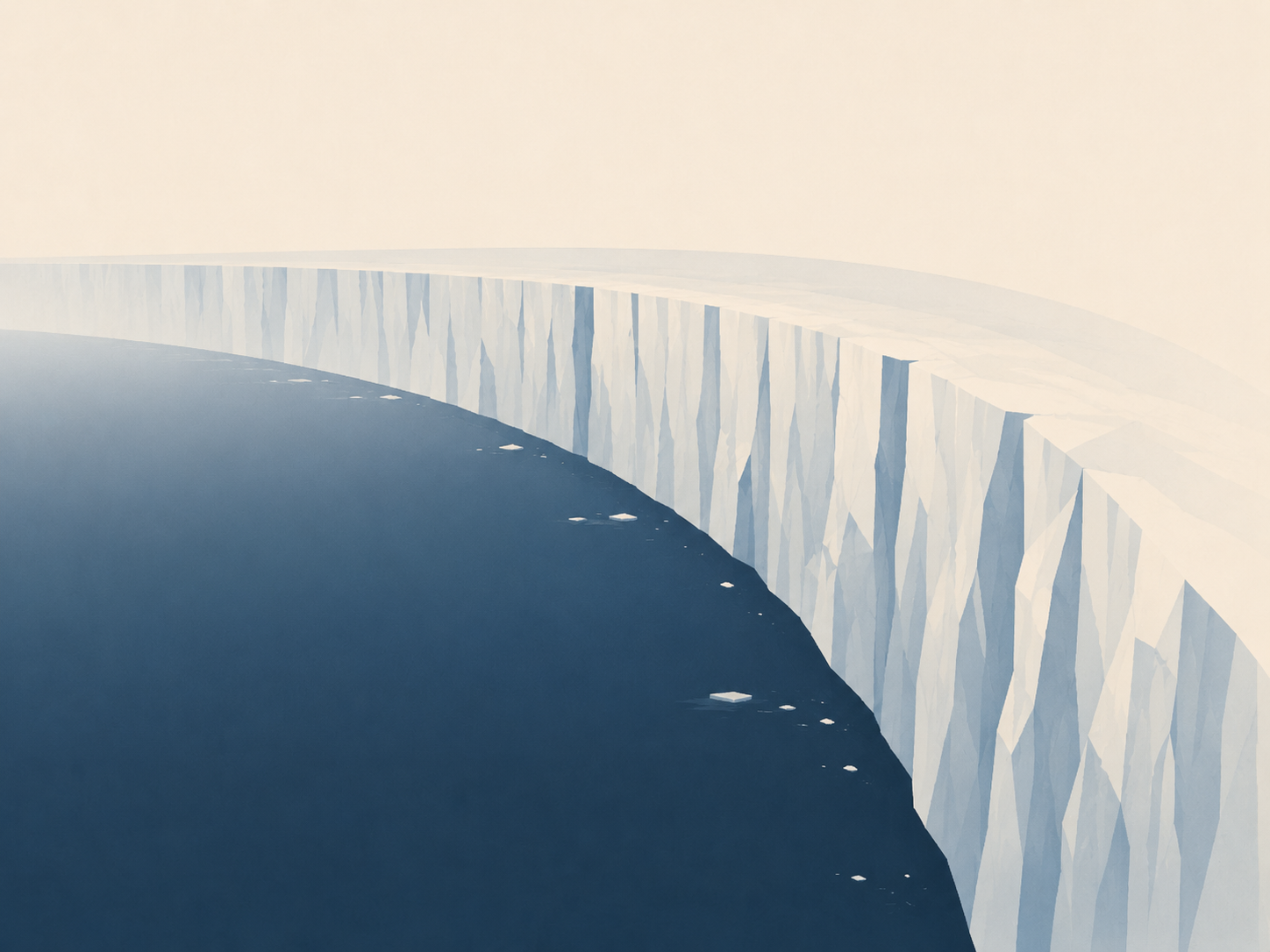
This containment leads directly to the central hypothesis of the Ice Wall. If the Earth is not a spinning ball, but a stationary plane, then the ocean cannot simply fall off into the void. It must be contained. This containment is achieved through a massive, glacial structure that encircles the entire disk of the world. This is the Ice Wall. It is not merely a sheet of ice like those found on mountain peaks or in the Arctic circle; it is a colossal precipice, a vertical structure that rises from the waters of the Southern Ocean and extends outward indefinitely. The size of this structure is difficult to comprehend. If the Earth is a disk with a circumference of roughly 24,901 miles, the Ice Wall would stretch for that entire distance, creating a perimeter of containment that is truly monumental. It is the ultimate boundary of our world, the finish line of the terrestrial plane.
The nature of this Ice Wall is a subject of intense speculation. Is it a natural formation, the result of geological forces pushing the ice outward as the planet cools? Or is it something more artificial, a man-made fortification designed to hold back the waters? Some theorists suggest that the Ice Wall is the underside of the firmament—the celestial dome that covers the Earth. In this scenario, the dome is solid, and the Ice Wall is the foundation upon which it rests. The waters of the world are trapped beneath this dome, and the Ice Wall is the only thing preventing them from spilling over the edge into the abyss above. This theory posits that the Ice Wall is the "bottom" of the universe, a solid surface that we cannot climb, only observe from the safety of the plane.
Speculation also surrounds the climate and geography of the Ice Wall. If the Ice Wall is a continuous barrier, what lies beyond it? Is it a sheer drop into a void, or is it a gradual slope leading to another continent? Some proponents of the theory suggest that the Ice Wall is the edge of the known world, and beyond it lies an infinite ocean. Others propose that there is a massive continent on the other side of the ice, a "Southland" that has been hidden from history. This continent could be teeming with life, or it could be a barren wasteland. The lack of evidence makes these speculations purely theoretical, but they serve to highlight the vastness of the unknown.
The implications of the Ice Wall theory are profound. It challenges our understanding of gravity, which is often explained as a result of the Earth's curvature. If the Earth is flat, gravity is not the result of a spinning mass, but rather a downward force pushing everything toward the center of the disk. This force is what keeps the waters of the ocean in place, preventing them from sliding off the edge. The Ice Wall is the physical manifestation of this containment. It is the wall that gravity cannot break. It is the final frontier, the point where the known world ends and the unknown begins.
The exploration of the Ice Wall is the ultimate challenge for modern Flat Earthers. It requires not just skepticism of the mainstream narrative, but a willingness to venture into the unknown. It requires a rejection of the comfort of the spherical model and a embrace of the mystery of the plane. The Ice Wall is the key to unlocking the secrets of our existence. It is the physical proof that the Earth is not a globe, but a plane.
But let’s get real for a second. We don’t know what’s down there. We see pictures of ice, sure. But we don't see the whole picture. We send drones and planes, but they stop at the edge. They don't go past. Why? Because they can't. The ice is too thick. The wind is too strong. The cold is too real. We are told that Antarctica is just a continent, like any other. But if it's just a continent, why is it so different? Why is it so hard to get to? Why can't we just drive a car there? We drive to every other continent. But Antarctica? It's off-limits. It's a military zone. It's a secret.
Think about the water. Water doesn't curve. If you pour a glass of water, it stays level. It doesn't bend. If the Earth was a ball, the water in the ocean would be falling off the sides. But it doesn't. It stays in a bowl shape. The Ice Wall is what keeps the water in. It's the dam. It's the wall that stops the ocean from flooding the world. It's the edge of the bowl.
Now, what's on the other side of the wall? That's the real question. Is it just more ice? Is it a cliff? Or is it something else? Some people think there's another landmass. Maybe there's a whole other world on the other side of the ice. Maybe there's a second sun. Maybe there's life that we've never seen. The possibilities are endless. But we'll never know unless we go there. And we can't go there. Not yet.
The Ice Wall is the ultimate mystery. It's the thing that keeps us up at night. It's the thing that makes us question everything we've been taught. It's the thing that makes us wonder if we're really alone in the universe. It's the edge of the known world. It's the end of the line. And it's waiting for us to find out what's on the other side.
The Ice Wall is more than just ice. It's a symbol. It's a symbol of the limits of our knowledge. It's a symbol of the things we don't understand. It's a symbol of the things we're afraid to explore. It's a symbol of the things we're told are impossible. But is it really impossible? Or is it just inconvenient? The Ice Wall is a challenge. It's a call to action. It's a call to explore the unknown. It's a call to find the truth. The truth is out there. The truth is on the other side of the Ice Wall. And we're going to find it. Eventually.
The Ice Wall is the ultimate frontier. It's the last place on Earth that hasn't been fully explored. It's the last place on Earth that we don't understand. It's the last place on Earth that we haven't conquered. And it's waiting for us. It's waiting for us to take the next step. It's waiting for us to push the boundaries of human knowledge. It's waiting for us to find out what's really out there. The Ice Wall is the key. The Ice Wall is the door. And it's time to open it.